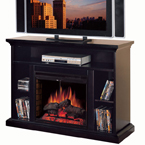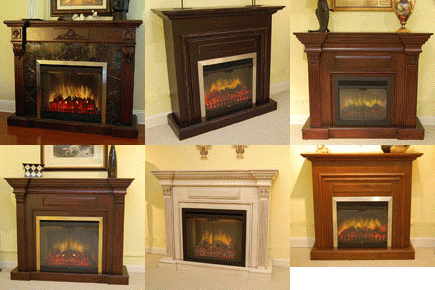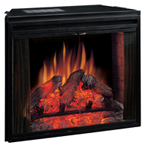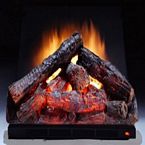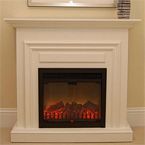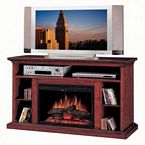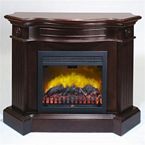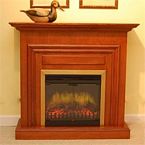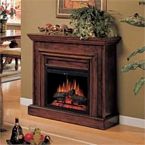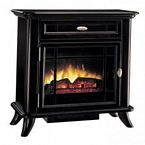
prcing of fireplace

Posted By: admin  //  Category: Uncategorized

Purchasing a Fireplace or Wood Stove

When selecting a fireplace or wood stove, you will be confronted with logistical questions as simple as whether the fireplace will physically fit into your home without requiring some sort of surgery on entryways, whether or not gas lines are available in your chosen location, and whether or not your budget can support as much fireplace or wood stove as you desire. The last question is the most difficult and generally causes the most discussion among prospective fireplace or wood stove buyers.

The first point to bear in mind is that fireplace and wood stove prices vary widely, depending on such issues as the price of their fuel, and the time of year or even the price of the raw materials (such as iron or steel) used in their construction. As well, since most retailers are free to set their own prices, your local area may have considerably higher prices for fireplaces and wood stoves than another area or buying online.

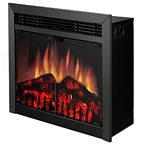
As a rough price comparison, most basic fireplaces fall in the $1,000 - $2,000 range. More advanced or “premium” fireplaces can cost more than $5,000. The price can vary depending on additional options, such as construction materials (plate steel vs. cast-iron), heat-circulating blowers, gold accents, fireplace tools and accessories, or types of flame visualizations in electric fireplaces or gas fireplaces. Know what options come with any fireplaces that you are considering so that you can decide whether or not you’re getting good value for your money. Of course, the prices of custom-designed fireplaces and high-end luxury fireplaces can quickly rise to dizzying heights, costing $25,000 and more.

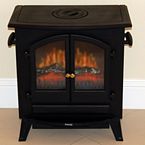
Wood stoves range in price from a few hundred dollars for the smallest and most basic plate steel units to several thousand for cast-iron wood stoves with large fireboxes and which conform to EPA Phase II regulations. While a basic functional wood stove may cost around $1,000, aesthetic accents, additional cooking space, or specialized materials can push that price well over $5,000.

So in the end, it’s just a matter of deciding what characteristics really are the most important to you and buying a wood stove, gas stove or one of may other types of stoves or fireplaces that fits into your budget

Fireplace Price Comparison

Posted By: admin  //  Category: Uncategorized

Fireplace.
Price Comparison..
The world’s largest fireplace manufacturer and leading provider of hearth products, announces the following tips and new technologies for reducing consumer heating bills.
Consider Zone Heating with Gas Fireplaces. The American Gas Association recommends consumers lower their thermostats as a way to reduce their heating bill. Using a gas fireplace to heat the room or living area used most allows homeowners to turn down the furnace thermostat–providing an immediate cost savings. For example, operating a furnace for one hour at 75,000 -100,000 Btu costs an average of $1.12 - $1.49. By comparison, a natural gas fireplace running at 30,000 Btu per hour costs only 45 cents.
Annual Fuel Utilization Efficiency rated direct vent gas fireplaces are tested to the same standard for high efficiency furnaces. Up to 70 percent of the heat direct vent gas fireplaces generate remains in the house. By comparison, masonry woodburning fireplaces can lose 85 of the fire’s heat through the chimney. Direct vent gas fireplaces are particularly effective for zone heating because people absorb the radiant heat from the glass front while the firebox also heats the air in the room.
In addition to zone heating savings, homeowners can save up to $12 each month on their gas bill by selecting a direct vent gas fireplace with an intermittent pilot ignition (IPI) system. For example, a new patented IPI system known as Intellifire(R) — available on Heat & Glo(TM), Heatilator(R) and Quadra-Fire(R) brand gas fireplaces — eliminates the need to keep the pilot light constantly lit. The IPI system automatically turns on the pilot when the homeowner turns on the fireplace, reducing the amount of gas used by the fireplace by up to 50 percent.
Some new direct vent gas fireplaces are programmable enabling consumers to program the unit to turn on or shut off automatically. The Heat & Glo Soulstice(TM) direct vent gas fireplace is a stylish fireplace that’s ideal for master suites and other intimate spaces. It comes standard with a sleep timer so homeowners can fall to sleep to the warmth and beauty of a fire or wake up to one.

sample2

Posted By: admin  //  Category: Uncategorized

Price Comparison
Different price points for different fireplace and woodstove features
When selecting a fireplace, you will be confronted with logistical questions as simple as whether the fireplace will physically fit into your home without requiring some sort of surgery on entryways, whether or not gas lines are available in your chosen location, and whether or not your budget can support as much fireplace or woodstove as you desire. The last question is certainly the most difficult of the lot. This is the question that generally sees the most attention, and causes the most discussion amongst prospective fireplace or woodstove buyers.
The first point to bear in mind is that fireplace and woodstove prices vary widely, depending on such issues as the price of their fuel, and the time of year or even the price of the raw materials (such as iron or steel) used in their construction. As well, since most vendors are free to set their own prices, your local area may have considerably higher prices for fireplaces and woodstoves than another area, or conversely, buying local may prove to be a steal.
As a rough price comparison, most basic fireplaces fall in the $1,000 - $2,000 range. More advanced or “premium” fireplaces can cost as much as $5,000. The price can vary depending on additional options, such as construction materials (plate steel vs. cast-iron), heat-circulating blowers, gold accents, fireplace tools and accessories, or types of flame visualizations in electric or gas fireplaces. Know what options come with any fireplaces that you are considering so that you can decide whether or not you’re getting good value for your money.
Of course, the prices of custom-designed fireplaces and high-end luxury fireplaces can quickly rise to dizzying heights, costing $25,000 and more, with only the sky being the limit. Again, if you don’t require platinum and silver construction, keeping your purchase below this level will not pose a significant problem.
Wood stoves range in price from a few hundred dollars for the smallest and most basic plate steel units to several thousand for cast-iron construction models with large fireboxes and which conform to EPA Phase II regulations. While a basic functional woodstove costs around $1,200 on average, aesthetic accents, additional cooking space, or specialized materials can push that price well over $5,000 as well.
So in the end, it’s just a matter of deciding what characteristics really are the most important to you and buying a stove or fireplace that fits into your budget.

sample article

Posted By: admin  //  Category: Firebox

Fireplace History
We’ve always loved an open flame
Human beings have used fireplaces for heat and security since before the beginning of recorded history. This is not surprising, since it has been said that the discovery of fire is second only in importance to the discovery of language – and fireplaces are a simple, effective and convenient way to control and contain a fire within the comfort of your home, whether it is a cave or a mansion.
The earliest fireplaces were made up of some stones, and potentially a hole in the roof of the structure to allow smoke to vent skyward. You can imagine how effective such a system would be. Although very simple and low tech, such techniques yielded proportionate effectiveness, with a very inefficient burn, tremendous indoor air pollution, and dirt and ash everywhere.
Fireplace History - Products & Resources
(what’s this?)
For a long time, fireplaces were simply a necessity. People knew how they were built, it was done a certain way, and it just worked as well as could be expected. In the 18 th century, fireplaces began to become more than a simple necessity – they began to become the centerpiece of a home, an aesthetic as well as a practical fixture. In this time period, new materials and methods of construction and manufacturing were being discovered. Abraham Darby established new methods of smelting, making newer, stronger metals – thus, iron was discovered. Since iron is so large and heavy, it must be heated to very high temperatures and poured into a large mould or cast and allowed to harden - hence the name “cast-iron”. Fireplaces made with this material were more resilient than the previous stone or plaster fireplaces, and they radiated heat more easily because of the metal’s ability to absorb large amounts of heat energy without cracking or chipping.
Fireplaces really began to come into their own during the Victorian era. In this time period, visual appeal began to take on even more importance than before, which resulted in stonemasons, blacksmiths and other artisans and craftsmen honing their skills as artists just as much as builders, so that rather than simply building a practical, functional fireplace, they could create masterpieces of stone, wrought iron, wood, and more exotic materials. As housing itself changed, fireplaces did as well, with a variety of new styles of fireplace design techniques emerging. Improved chimneys reduced indoor air pollution and improved the level of safety and overall burn efficiency of fireplaces as well.
If you are familiar with antique wood stoves, you likely already know that Benjamin Franklin had a part to play in the development of the fireplace as we know it today as well. He found that most fireplaces lost a significant amount of heat through adjoining walls, which caused him to simply move the fireplace into the center of the room by building a freestanding firebox. This pot-bellied device came to be known as the Franklin stove, which was made of cast-iron. The heavy iron stored heat so that even as the fire died down, heat continued to radiate into the room. But here’s an interesting tidbit – Benjamin Franklin didn’t really create the most vital feature of the Franklin stove. In his original design, smoke was vented from the bottom, which left no way to draw in fresh combustion air. Noting this, a Philadelphia resident named David Rittenhouse added a pipe bent at 90 degrees to the back of the stove, directing the smoke up and out of a chimney – the stovepipe as we now know it, which gave the opportunity to draw in air through the bottom of the stove. Although this design was adopted in nearly all Franklin stoves immediately, the name “Rittenhouse stove” just didn’t roll off of the tongue as fluidly.
So the one thing that shows through when looking back at wood-burning appliances throughout the ages is that although fireplaces and woodstoves have changed, human being have always loved the warmth and charm of a fire on the hearth. Although central heating can be more convenient, nothing beats the atmosphere provided by the crackle of burning wood and the flicker of dancing flames provided by a beautiful fireplace.

Operating Costs

Posted By: admin  //  Category: Indore Fireplaces

Page Under Construction

Ventless Gas Fireplaces

Posted By: admin  //  Category: Indore Fireplaces

Direct Vent Fireplaces

Posted By: admin  //  Category: Indore Fireplaces

Page Under Construction

Zero Clearance Fireplaces

Posted By: admin  //  Category: Indore Fireplaces

Page Under Construction.

Heating Efficiency

Posted By: admin  //  Category: Indore Fireplaces

Page Under Construction

Gas Fireplaces

Posted By: admin  //  Category: Indore Fireplaces